
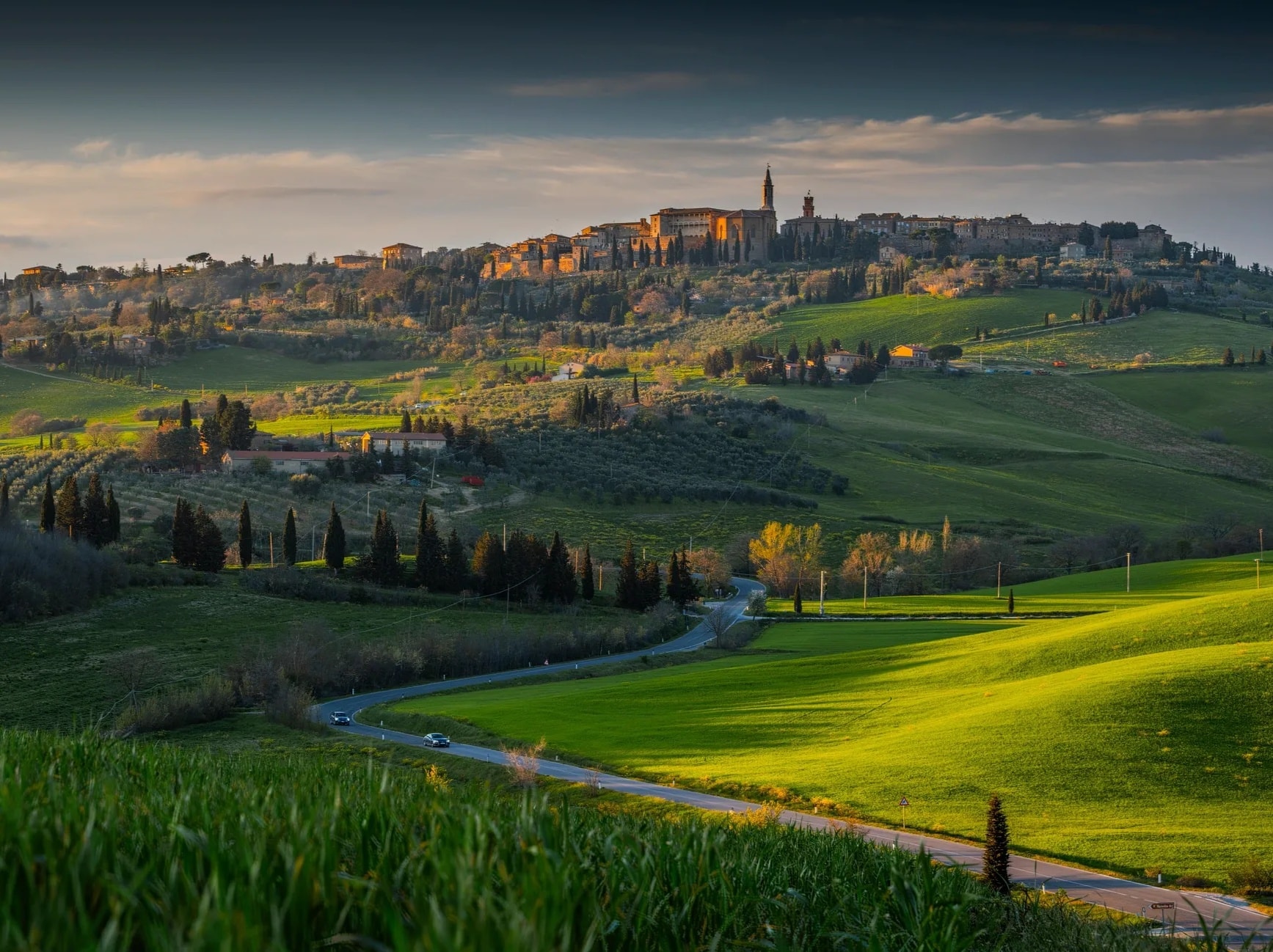
There is a light in Tuscany in spring that does something to you. It arrives in the late afternoon, low and golden, and it turns the cypress rows into dark exclamation marks against a sky that has gone the colour of old honey. We have seen it four times now and it still stops us.
Why We Keep Returning
The first time we came to Tuscany we were doing what everyone does — Florence, Siena, San Gimignano, the Chianti road. It was wonderful and overwhelming and we left feeling we had seen the highlights without understanding the place.
The second time we came with our family and stayed in a farmhouse outside Arezzo. We were fortunate enough to be there for New Year's Eve, and the owners welcomed us into their celebration as though we had always been part of it. That afternoon we made ravioli together in the kitchen — the pasta rolled by hand, served first with a simple pomodoro and then with sage and butter. That evening we sat down to bruschetta, the ravioli we had made ourselves, chianina steak, an arugula salad, and wine with every course, finishing with the traditional dessert and a glass of pope's wine as the local New Year's custom demands. Then the owners lit a great bonfire of olive branches in the yard — a gesture made especially for us to mark the occasion. It is difficult to describe what that kind of hospitality does to you. The sense of belonging, of being folded into someone else's family for an evening, is not something you find in a hotel. It is the reason we keep coming back.
The Val d'Orcia
The Val d'Orcia is the Tuscany of the imagination — the rolling hills, the lone farmhouses, the cypress avenues, the pale clay roads that wind between fields of wheat and sunflowers. It is a UNESCO World Heritage landscape, which means it is protected from development, which means it looks now more or less as it looked in the Renaissance paintings that made it famous.
We visited Pienza on one of our drives through the valley — a small Renaissance town perched on the ridge with views over the Val d'Orcia that stop you in your tracks. The main square, designed by Pope Pius II in the fifteenth century, is one of the finest pieces of urban planning in Italy, and the outlook from the town walls across the pale clay hills and cypress rows below is the view that appears on every Tuscany photograph you have ever seen. Another day we found our way to Castiglione d'Orcia, a quieter hilltop town that sees far fewer visitors, and had a genuinely enjoyable meal there — the kind of lunch built around several courses and local wine, where the conversation comes easily and the afternoon disappears without anyone noticing.
The Chianti Road
Tuscany produces some of the greatest wines in the world, and the pleasure of drinking them here — in the place where the grapes were grown, with food that was made to accompany them — is different from drinking them anywhere else. On our third trip we spent time in the Chianti region, driving between the small towns and stopping at local producers along the way to taste.
Greve in Chianti was a highlight — a proper market town with a distinctive piazza and a relaxed atmosphere that felt entirely local. Antica Macelleria Falorni is somewhere we have returned to on every visit — a butcher shop and cheese cellar that has been in the Falorni family for over 200 years, with wine dispensers running along the walls offering tastes from producers across the region, and counters piled with local meats and cheeses. Bringing our grown children there one afternoon remains one of our most cherished memories of Chianti. The Chianti road between the towns is beautiful in itself, winding through vineyards and olive groves with views opening and closing as you climb and descend. It is the kind of drive where you find yourself pulling over simply because the light on the vines is too good to pass.
Tuscany rewards every kind of traveller and every kind of pace. It is a region of extraordinary wine, olive oil, and food — produced from landscapes that are themselves worth the journey. The hill towns, the vineyard roads, the Renaissance cities, the quiet valleys between — there is more here than any single trip can hold, and that is precisely why so many people find themselves coming back.
The sense of belonging, of being folded into someone else's family for an evening, is not something you find in a hotel. It is the reason we keep coming back.
We have been in April and May, and both are exceptional. The landscape is green and flowering, the days are warm without being oppressive, and the crowds that descend in summer have not yet arrived. April brings the wildflowers across the Val d'Orcia; May brings a warmth that makes long lunches on a terrace feel entirely justified.