
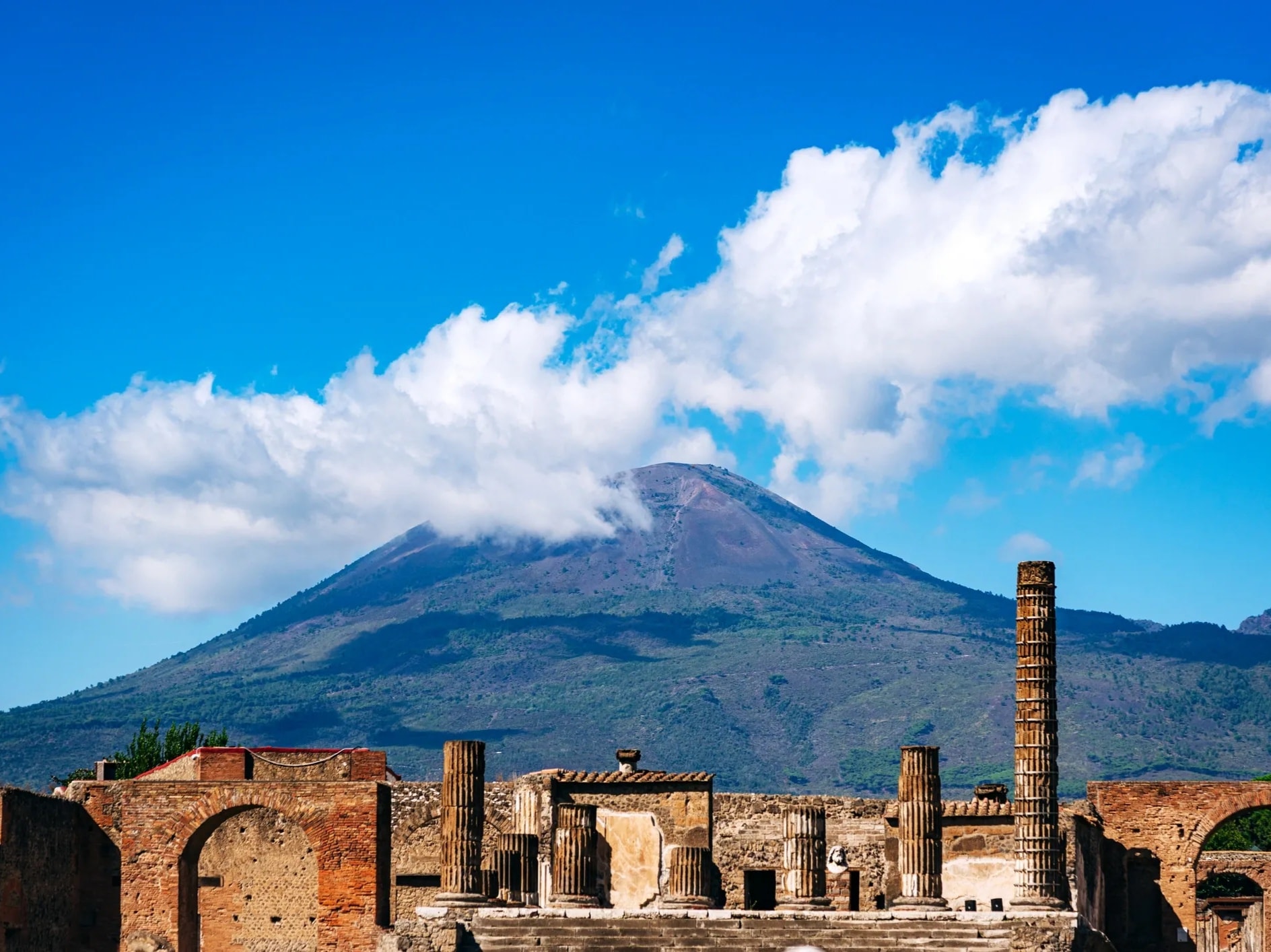
Of all the places I have visited in Italy, Pompeii is one that has stayed with me long after I left. There is something unforgettable about walking through its ancient streets, knowing that the people who once lived there walked on those very stones nearly two thousand years ago.
A Lively Roman City
Located near Naples, at the foot of Mount Vesuvius, Pompeii was once a thriving Roman city filled with homes, shops, bakeries, temples, and bustling streets. Today, its ruins offer something extraordinary: a glimpse into everyday life in the ancient world.
As I walked through Pompeii, I was struck by how surprisingly familiar parts of the city felt. I could see the remains of houses with courtyards and colourful wall paintings, ancient storefronts, fountains, and even streets marked by the deep tracks left by Roman carts. It was easy to imagine merchants calling to customers and families gathering around their homes.
Then There Was Mount Vesuvius
Seeing the volcano rising above the ruins made the history of Pompeii feel much more real. In AD 79, Vesuvius erupted violently, burying the city beneath layers of ash and volcanic material. The eruption brought Pompeii's life to a sudden end — but in a strange way, it also preserved a moment in time.
What I found most fascinating was not simply the grandeur of the ancient buildings, but the small details of ordinary life. Pompeii reminds us that history wasn't only made by emperors and generals. It was also made by shopkeepers, parents, workers, children, and neighbours going about their daily routines.
Walking the Forum
Walking through the Forum, I could almost picture the city as it once was — a busy centre where people gathered, traded goods, discussed politics, and worshipped their gods. Elsewhere, the remains of bakeries and homes revealed details about how people ate, worked, relaxed, and entertained themselves.
Pompeii is also a place that inspires reflection. The ruins are beautiful, but they carry a powerful sadness. Everywhere you look, there are reminders that an ordinary day can become an extraordinary historical moment. The people of Pompeii had no idea that their city was about to become one of the world's most remarkable archaeological sites.
A Conversation Across Centuries
Perhaps that is why Pompeii became one of my favourite places in Italy. It isn't simply a collection of ancient ruins. It feels like a conversation across centuries — a chance to stand where other people once stood and imagine what their lives were like.
When I think back on Italy, I remember its beautiful landscapes, delicious food, historic cities, and lively streets. But I also remember the quiet streets of Pompeii, with Mount Vesuvius watching over them.
Pompeii taught me that sometimes the most powerful way to experience history is simply to walk through it.
It feels like a conversation across centuries — a chance to stand where other people once stood and imagine what their lives were like.
Pompeii is a short train ride from Naples or Sorrento on the Circumvesuviana line — the Pompeii Scavi stop is right at the entrance. Arrive early if you can, as the site is large and the crowds grow through the morning. Give yourself at least half a day, and more if you are able.