
Rome, Italy — Bella Via Travels
Italy
Rome
The eternal city
Rome is the city that contains more history per square metre than any other on earth — and the city that manages, despite everything, to feel entirely alive.
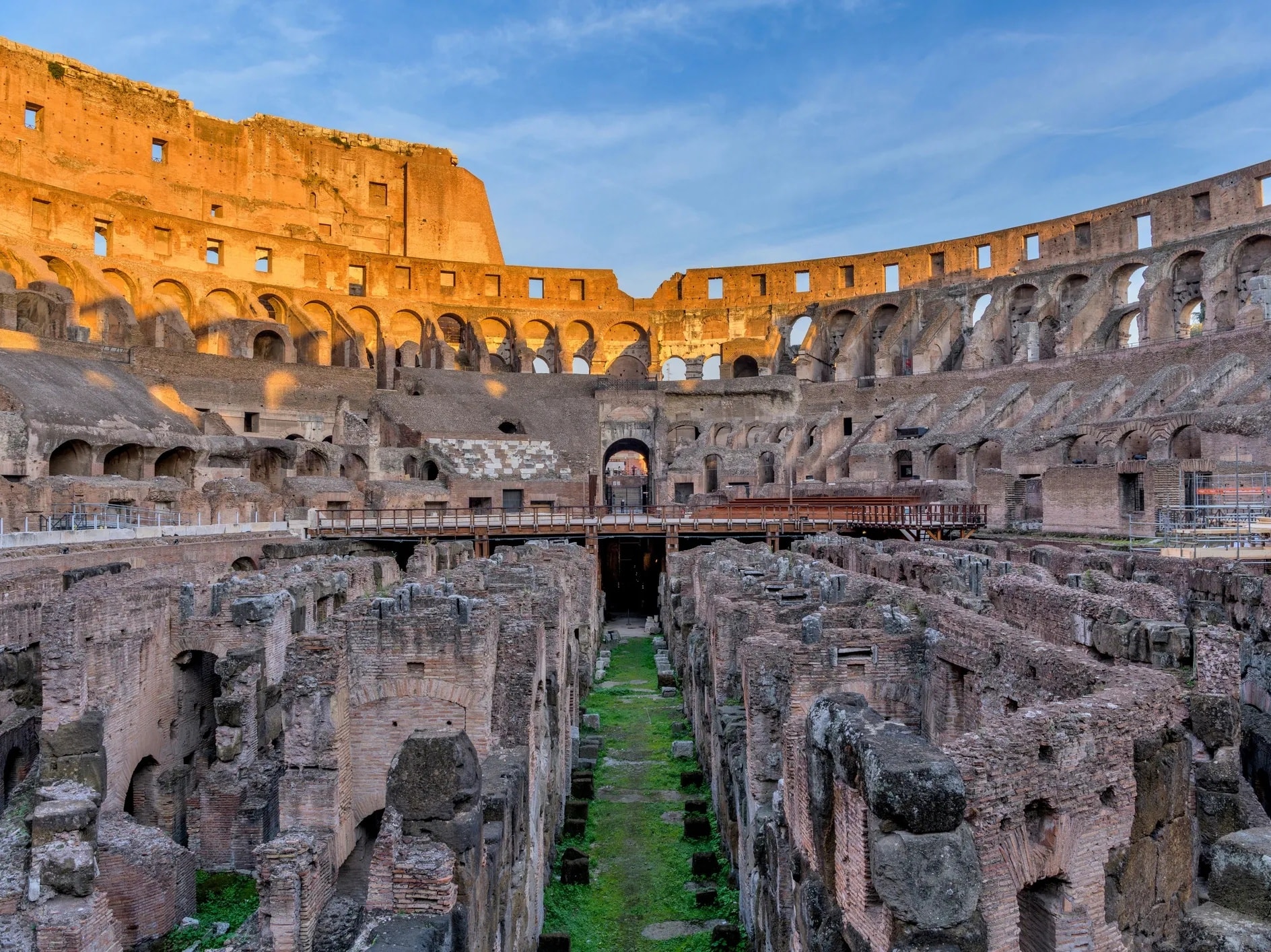
The obvious monuments are obvious for a reason: the Colosseum at dusk, the Forum in the morning light, the Pantheon at noon when the oculus casts a circle of light on the floor — these are experiences that justify every cliche ever written about Rome. But the city rewards those who look beyond them.
Trastevere, on the west bank of the Tiber, is the Rome that Romans actually live in — a neighbourhood of cobbled streets, ivy-covered buildings and trattorias that have been serving the same dishes for generations. The Testaccio market, the Campo de' Fiori on a weekday morning, the Pigneto neighbourhood to the east — these are the Rome that stays with you.
The Vatican is a city within a city — the Sistine Chapel, the Vatican Museums, St Peter's Basilica and the Castel Sant'Angelo are all within walking distance of each other, and all require more time than most visitors give them. Bella Via designs Rome itineraries that combine the essential with the unexpected.
“Rome at six in the morning, with the streets empty and the light on the stone — that is the city at its most itself.”
What to Expect
The Bella Via Experience in Rome
The Colosseum
The largest amphitheatre ever built — capable of holding 80,000 spectators. At dusk, when the crowds thin and the stone turns gold, it is one of the great sights of the ancient world.
The Palatine Hill
The birthplace of Rome — the hill where Romulus founded the city, and where the emperors built their palaces above the Forum. The views down over the ruins are the finest in Rome.
The Pantheon
The best-preserved building of ancient Rome — a temple completed in 125 AD whose unreinforced concrete dome remained the largest in the world for thirteen centuries. At noon the oculus casts a perfect circle of light on the floor.
The Roman Forum
The heart of ancient Rome — a landscape of ruins that rewards those who take the time to understand what they are looking at.
The Vatican Museums
The Sistine Chapel, the Raphael Rooms and a collection of ancient sculpture that is among the finest in the world — best visited with a private guide.
Trastevere
The most atmospheric neighbourhood in Rome — cobbled streets, ivy-covered buildings and trattorias that have been serving the same dishes for generations.
The Borghese Gallery
The finest collection of Bernini sculpture in the world, housed in a villa in the Borghese gardens — entry is limited and must be booked in advance.
Beyond the Vatican
Hidden Museums
Rome has more museums than any city in the world — and most visitors see only the Vatican. The collections below contain some of the greatest works of antiquity, in rooms that are rarely crowded and almost never rushed.

The Capitoline Museums
The oldest public museums in the world, founded in 1471 — the original bronze equestrian statue of Marcus Aurelius, the Capitoline Wolf and the Dying Gaul are here, largely unvisited.
The Palazzo Altemps
A Renaissance palace housing one of the finest collections of ancient sculpture in Rome — the Ludovisi Throne, the Galatian Suicide and the Ares Ludovisi, in rooms that are rarely crowded.
The Crypta Balbi
A museum built over the ruins of a Roman theatre — layers of history from the first century BC to the medieval period, visible through glass floors and in extraordinary condition.
The Museo Nazionale Romano
Four sites across Rome containing the finest collection of Roman antiquities in the world — the Palazzo Massimo alone, with its frescoes from the Villa of Livia, justifies a visit.
Water & Stone
The Fountains of Rome
The Trevi Fountain
The most theatrical fountain in the world — Nicola Salvi's 1762 baroque masterpiece fills an entire palazzo facade. Arrive before seven in the morning and you will have it almost to yourself.
The Fountain of the Four Rivers
Bernini's 1651 centrepiece of the Piazza Navona — four river gods representing the Nile, Danube, Ganges and Rio de la Plata, crowned by an Egyptian obelisk.
The Barcaccia
Bernini's earliest major work, at the foot of the Spanish Steps — a half-submerged boat spilling water, designed to work with the low water pressure of the Acqua Vergine aqueduct.
The Fontana delle Tartarughe
The Turtle Fountain in the Piazza Mattei — one of the most intimate and beautiful in Rome, attributed to Giacomo della Porta and cast in 1581.

The Trevi Fountain — arrive before seven in the morning.
Caravaggio, Bernini & Beyond
Churches with Famous Works of Art
Rome's churches contain more great art than most national museums — and admission is free. The four below hold works that would be the centrepiece of any gallery in the world; in Rome, they hang in side chapels that most visitors walk straight past.

San Luigi dei Francesi
Three Caravaggio paintings of the life of Saint Matthew — the Calling, the Inspiration and the Martyrdom — hang in a side chapel and are among the most important works in Rome.
Santa Maria del Popolo
Two more Caravaggio masterpieces — the Conversion of Saint Paul and the Crucifixion of Saint Peter — alongside Raphael's Chigi Chapel and Bernini's Daniel and Habakkuk.
Sant'Ignazio di Loyola
Andrea Pozzo's 1694 trompe l'oeil ceiling fresco creates an illusionistic dome and nave extension of extraordinary ambition — stand on the marble disc in the floor to see it resolve.
Santa Maria della Vittoria
Bernini's Ecstasy of Saint Teresa — perhaps the greatest sculpture of the baroque period — occupies the Cornaro Chapel in a church that most visitors to Rome never enter.
San Pietro in Vincoli
Michelangelo's Moses — one of the most commanding sculptures ever made — presides over a side chapel alongside the chains of Saint Peter, the relics that give the church its name. Visited by few, remembered by all.
Rome rewards those who arrive with curiosity and leave with a deeper understanding of what the Western world is built on. We will help you find the journey that does it justice.