Champagne, France — Bella Via Travels
France
Champagne
The world's most celebrated wine landscape
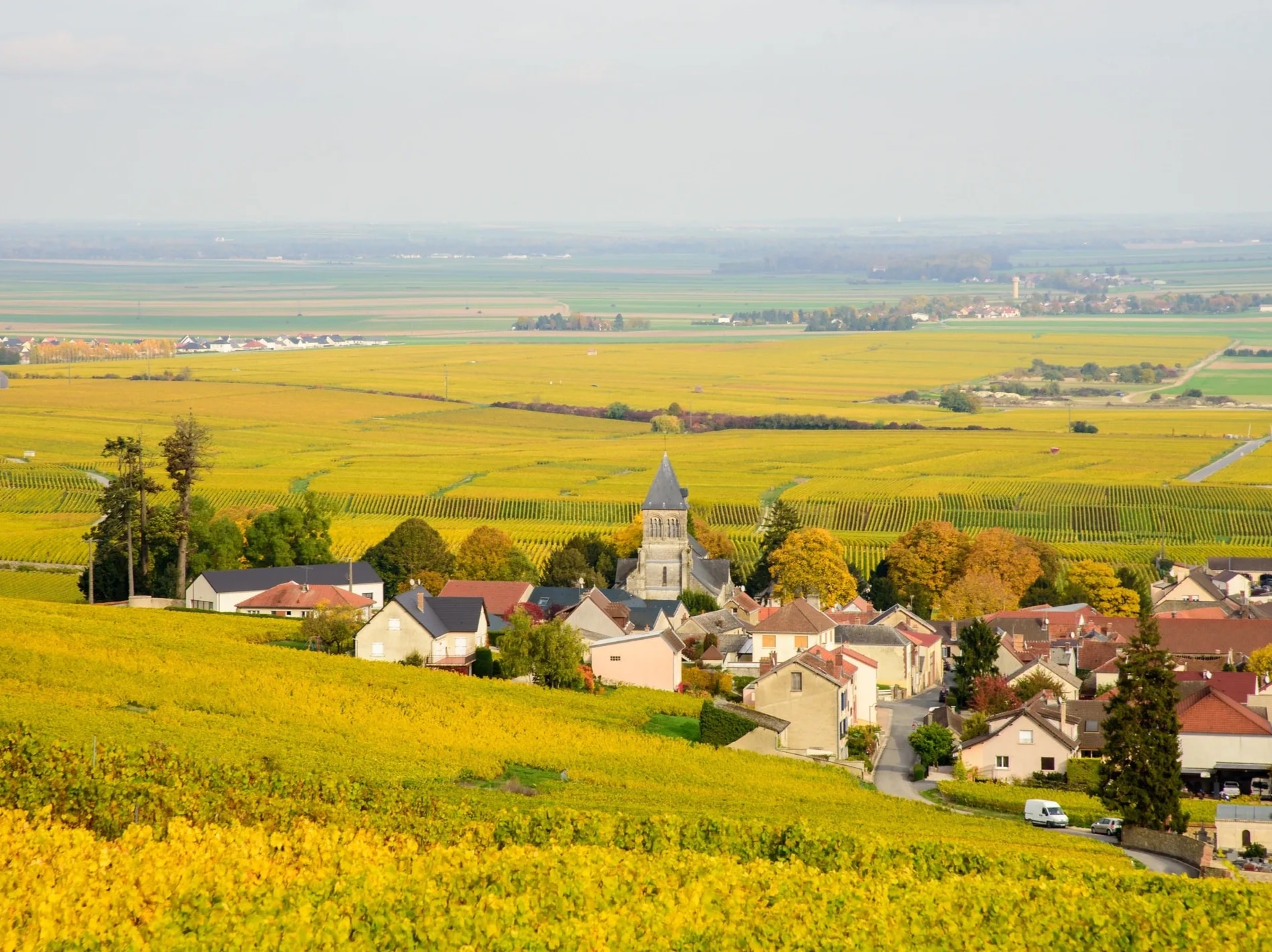
Champagne is a region of chalk hills, cathedral cities and extraordinary wine — a landscape that has been shaped over centuries by the pursuit of a single, perfect thing. The vineyards of the Montagne de Reims, the Vallee de la Marne and the Cote des Blancs produce the grapes that fill the cellars of Reims and Epernay, and the result is the most celebrated wine in the world.
Reims is one of the great cathedral cities of France — the Cathedrale Notre-Dame de Reims, where the kings of France were crowned for a thousand years, is among the finest Gothic buildings in Europe, and the city's champagne houses — Taittinger, Veuve Clicquot, Pommery — offer cellar visits that descend into the chalk caves beneath the city. The caves are a UNESCO World Heritage Site, and the experience of walking through them with a glass in hand is one of the great pleasures of French travel.
Epernay is the capital of champagne production — the Avenue de Champagne, lined with the grand houses of Moet & Chandon, Perrier-Jouet and Pol Roger, is the most valuable strip of real estate in France by some measures, and the cellars beneath it hold hundreds of millions of bottles ageing in the chalk. The town is small and unpretentious, and the contrast between the grandeur of the houses and the quietness of the streets is part of its charm.
The villages of the Grand Cru vineyards — Ay, Bouzy, Ambonnay, Cramant — are the heart of the region, and the small grower-producers who farm them make champagnes of extraordinary character that rarely leave France. Bella Via designs Champagne itineraries that combine the great houses with the growers, the cathedrals with the countryside.
“To stand in a chalk cellar beneath Reims with a glass of something extraordinary and understand, for the first time, what champagne actually is — that is the Champagne we want to show you.”
What to Expect
The Bella Via Experience in Champagne
Reims Cathedral & the Champagne Houses
The Gothic cathedral where French kings were crowned, and the great champagne houses — Taittinger, Veuve Clicquot, Pommery — with their UNESCO-listed chalk cellars beneath the city.
Epernay & the Avenue de Champagne
The capital of champagne production — Moet & Chandon, Perrier-Jouet, Pol Roger — and the cellars beneath the Avenue de Champagne holding hundreds of millions of bottles.
The Grand Cru Villages
Ay, Bouzy, Ambonnay, Cramant — the villages of the Montagne de Reims and the Cote des Blancs, where small grower-producers make champagnes of extraordinary character that rarely leave France.
The Vallee de la Marne
The river valley at the heart of the region — a landscape of vine-covered slopes, small villages and the Marne winding through it all, best explored by bicycle or on foot in autumn when the harvest is underway.
Champagne rewards those who look beyond the label and into the landscape. We will show you the region that makes the wine, and the wine that makes the region.